


Dear Reader
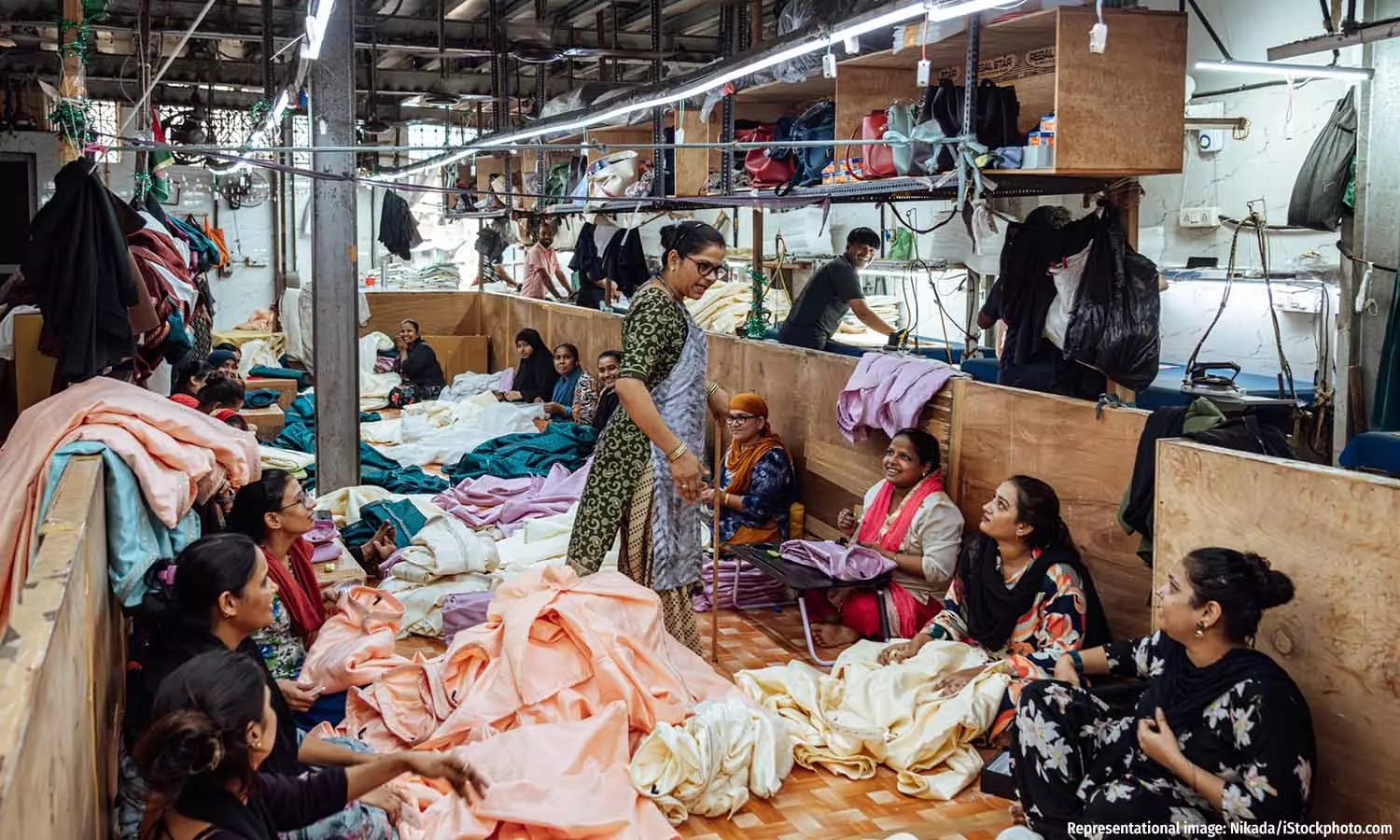
Forty-year-old Smita (name changed), a garment worker in Gurugram, says women fainting in her factory due to heat and exhaustion is a common sight. Ceiling fans barely provide relief. “Our eyes burn. We get headaches. We also feel a burning sensation when we urinate,” she says.
Last week, we explained how India’s new labour codes, rolled out in November 2025, do not mention climate change. And where they do offer guidance on protection from heat, India’s small establishments fall outside the threshold at which these protections kick in. Women are particularly vulnerable to climate risks.
This week, we spoke with women workers in the garment and automotive component manufacturing industries, some of them in large setups with more than 200 workers, who still bear the brunt of extreme weather, with little in the form of protection or relief. A day off from work or lower productivity can lead to income loss, even as health systems supposed to help them are inaccessible or messy.
Elsewhere, the World Health Organization issued new treatment guidelines for kala-azar and its skin manifestation, but the new protocol needs more clarity, says Shyam Sundar, member of the WHO’s guideline development group.
The cost of working through heat
Nibha Kumari is a 33-year-old operator in an automobile component manufacturing unit in Faridabad, which employs 200 people. “We have a tin roof and we have a cooler for each of the 30 machines,” she says.
Summers are particularly difficult. “Sometimes, I get headaches during intense heat in the summer while working. To cope, I splash cold water on my face,” she says. The factory has no windows for ventilation.
Garment worker Kavita walks 40 minutes to her factory, even in summer. “Shared autos cost Rs 40 each day. I can use it to buy vegetables,” she says.
“We get headaches and rashes around the neck. Women regularly faint. Even our phones get hot,” says 31-year-old Sameeta (name changed), another garment worker in Gurugram.
“While the old [labour] laws had relatively better provisions for workers, they were not properly implemented. So, many workers, especially women, might not know what they have lost under the new Codes,” explains Akash Bhattacharya, a historian, lawyer and trade unionist based in Delhi.
Employees’ State Insurance Corporation (ESIC) can help with income protection through cash transfers during sickness, and finance and direct delivery of healthcare through its own hospitals and dispensaries. But the facilities are far away, workers say. A 2026 review by the non-profit Safe In India found that three in five injured workers received their ESIC e-Pehchaan card only after their accident.
The Code on Social Security, 2020 recognises heat- and cold-related illness as occupational diseases, which means workers can be compensated for it. But proving that heat caused a specific illness is difficult. Symptoms like fatigue and dizziness overlap with other conditions, and some of the most serious effects—like kidney damage—take years to surface.
Rohini Krishnamurthy writes in this second of our four-part series.
New guidelines, new risks
In July 2026, the WHO issued new treatment guidelines for kala-azar and its skin manifestation, post-kala azar dermal leishmaniasis (PKDL) reducing the use of miltefosine, a drug which was associated with eye problems, including blindness.
Kala-azar literally means black fever, as the disease results in greyish-blackish discolouration of the skin. It is transmitted to humans by the bite of female sandflies locally called balumakhi. This disease is fatal if left untreated. PKDL affects about 5-10% of treated Kala-azar patients, causing white patches (macules) or rash-like papules or large boils (nodules).
PKDL is a threat to Kala Azar elimination as people with PKDL are known to have the parasite in their body and can therefore unknowingly spread the disease in the community. Both these are neglected tropical diseases spread by the same parasite and affect the most marginalised persons in Bihar, and some parts of Jharkhand, Uttar Pradesh and West Bengal.
In December 2023, India achieved the elimination target (less than 10 cases per block per 10,000 population) and transitioned into a consolidation phase of sustaining elimination.
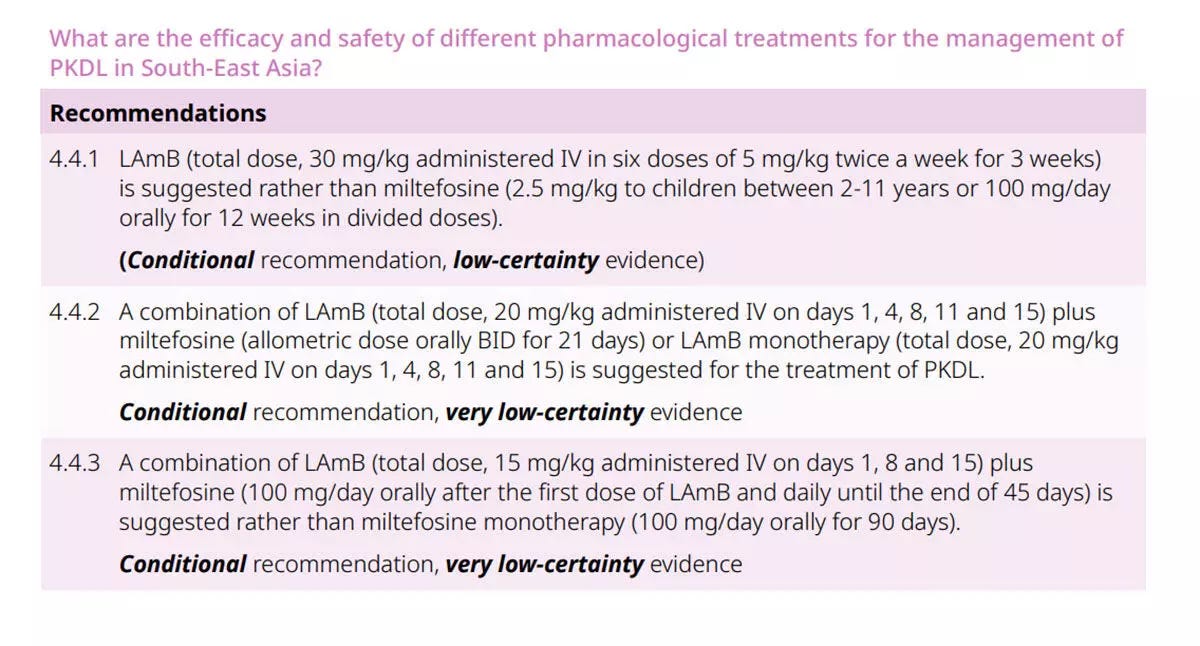
The new guidelines for PKDL list regimens that have low or very low certainty evidence. “They have also said that the recommendations are conditional. Why is this conditional? So it is very confusing to me and needs to be sorted out,” says Shyam Sundar, distinguished professor of medicine at Banaras Hindu University, and a member of the Guideline Development Group and founder of the Kala-azar Medical Research Centre in Muzaffarpur, Bihar. In May this year, he was awarded the Padma Shri for his contribution to medicine.
“The WHO says that higher cumulative doses of Liposomal ambisome should be administered only in centres with capacity to monitor serum potassium, renal function and manage electrolyte abnormalities,” he explained, adding that it is not possible at the primary health centre level.
Read the full interview with Menaka Rao.
That’s all for this week. We’ll be back next week with more.