


Dear Reader
On Monday, the 31st Conference of Parties (COP 31) begins in Antalya, Türkiye.
For India, this comes at a time of widespread drought in the ‘super El Niño’, which led to a deficit rainfall year and higher temperatures in several parts of the country. At the same time, coastal Andhra Pradesh was battered by repeated cyclones.
A critical question before countries, in addition to reducing emissions, is how they protect livelihoods, health and lives. In this context, we studied India’s new labour codes and the missed opportunity in ensuring protections from climate for the country’s large workforce, especially its women workers.
The Climate Blindspot
India’s new labour codes, under which the government framed rules for implementation in May this year, do not once mention climate change. This is even as the past 11 years have been the warmest on record, and extreme weather events are becoming more frequent.
Women in India earn 24% less than men in salaried work, and 34% less in casual daily wages, according to government data. Climate change is linked to lost work hours, illness and rising household costs, and women are particularly vulnerable.
For instance, women informal workers face a three-fold higher risk of heat-related illness and a 2.7-fold higher risk of reduced kidney function compared to men in similar heat conditions at workplaces, according to a 2024 study. Poor access to healthcare and cooling facilities, culturally prescribed heavy clothing, and nutritional scarcity due to prioritisation of food for children and men compound that risk, a 2018 review notes.
Safe working conditions, paid sick leave, health insurance, maternity benefits, income support during climate disasters & bargaining power can help, experts say. But India’s new labour codes offer little guidance on most of them—and the protections that do exist come with thresholds and exclusions that leave many workers outside their reach. Rohini Krishnamurthy writes in the first part of the series.
At Risk On The Factory Floor
In this second part of the series, we follow women in Gurugram’s garment factories and Faridabad’s auto-component manufacturing units to understand the impact of climate on their health and incomes, and the protections they are able to access.
Forty-year-old Smita, a garment worker in Gurugram, says women fainting in her factory due to heat and exhaustion is a common sight. Ceiling fans barely provide relief. “Our eyes burn. We get headaches. We also feel a burning sensation when we urinate,” she says.
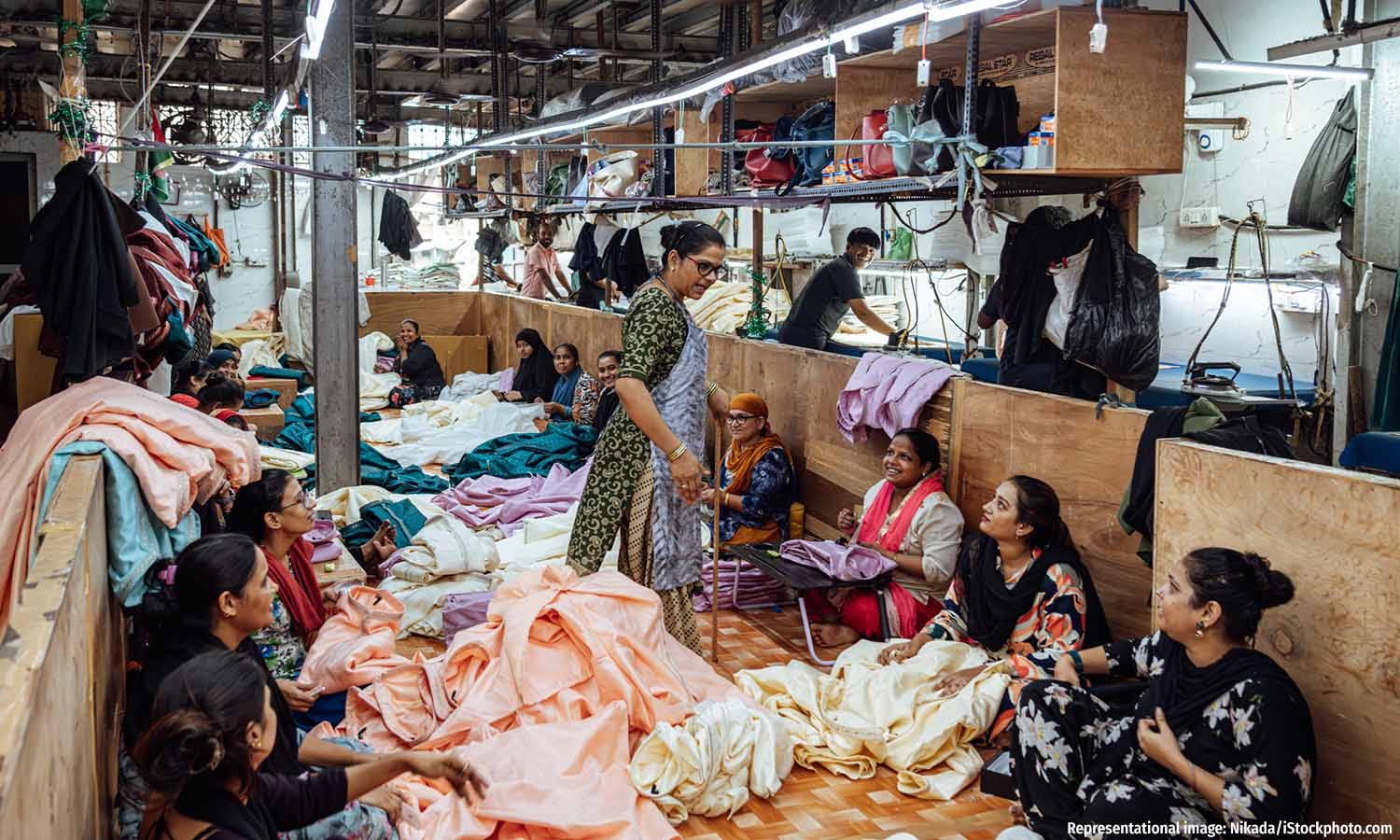
Rama Devi stitches 60 pieces an hour on the top floor of a garment factory in Gurugram—the hottest floor in the building, made worse by tin roofing that traps heat. Summers are particularly hard. She has no way of knowing the actual temperature on the factory floor; there’s no recording device, and no legal requirement for one.
India’s Code on Social Security, 2020 recognises heat- and cold-related illness as an occupational disease, which means workers can be compensated for it. But proving that heat caused a specific illness is difficult. Symptoms like fatigue and dizziness overlap with other conditions, and some of the most serious effects—like kidney damage—take years to surface, Rohini writes.
Working Outside The Net
Every alternate morning, Ranjita wakes before dawn, wraps vessels and plastic goods in cloth, and carries them on her head to catch a bus to Delhi’s outer markets. She walks door-to-door through the day’s heat, trading her goods for used clothes. By evening she’s home, exhausted, cooking her family’s only meal of the day. The next morning, she’s up early again to resell what she collected.
This year, the heat finally broke her routine. “It is too hot. I have high blood pressure, bouts of dizziness and frequent headaches,” she says. She took a two-month break—unpaid, unprotected, with no employer to answer to and no law that recognises her as a worker in the way it would a factory employee.
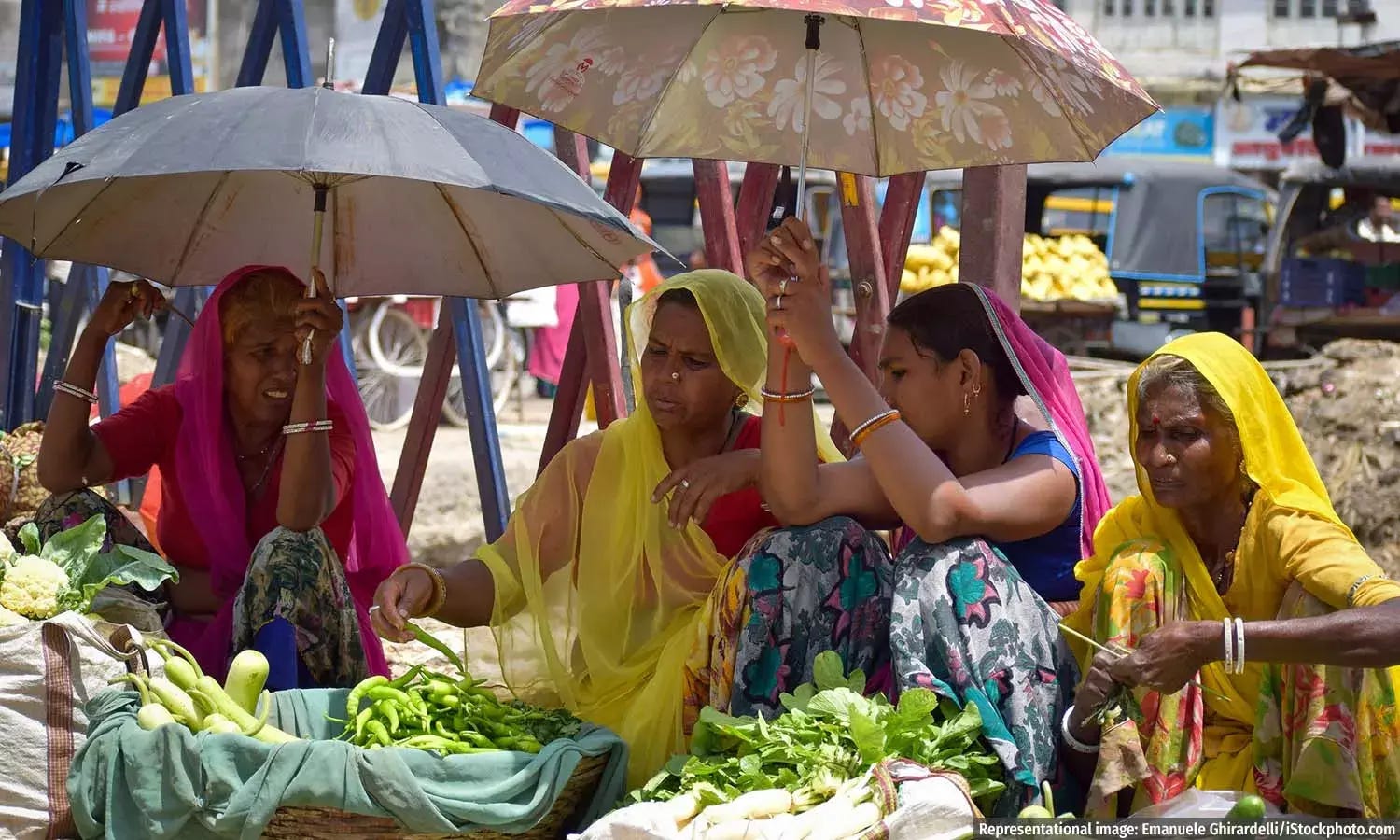
More than 90% of India’s workforce is engaged in the informal sector, according to a 2025 policy paper from the IZA - Institute of Labor Economics, Germany. Informal workforce includes domestic workers, home-based workers, contributing family workers, casual day labourers, construction workers, street vendors. It also includes workers in the formal sector lacking social security benefits provided to employees.
For the third part of the series, we met street vendors who are considered self-employed and fall outside many worker protection systems, and construction workers on small sites, who fall outside the thresholds that would otherwise make them eligible for protections. Overall, India has about 70 million construction workers and 16.5 million street vendors. We spoke to workers earning as little as Rs 300 a day in summer heat, and families without ration cards after years of trying. Read more here.
The Risky Gig
Ganga (name changed), 43, was first drawn to gig work about a decade ago due to flexible working hours and the opportunity to earn a decent income. A beautician with Urban Company, Ganga works in a 7-km radius around her home, and uses a scooter for commuting.
Once in May this year, when the roads were inundated due to heavy rains, she tried to contact the help centre for cancellation or rescheduling. “The Help Centre told me they had not received a weather update and that I have to be on time at the client’s residence or cancel the booking myself.”
Earlier, a worker could choose which bookings to accept, but now, she said, she is automatically assigned gigs, limiting her flexibility. Ganga is allowed to cancel four bookings in 28 days, but any additional cancellations will lead to “re-training” or her access to the app being paused for a few days—both resulting in loss of incomes that workers cannot afford.
“Urban Company calls us ‘partners’, but we do not feel like one,” she says.
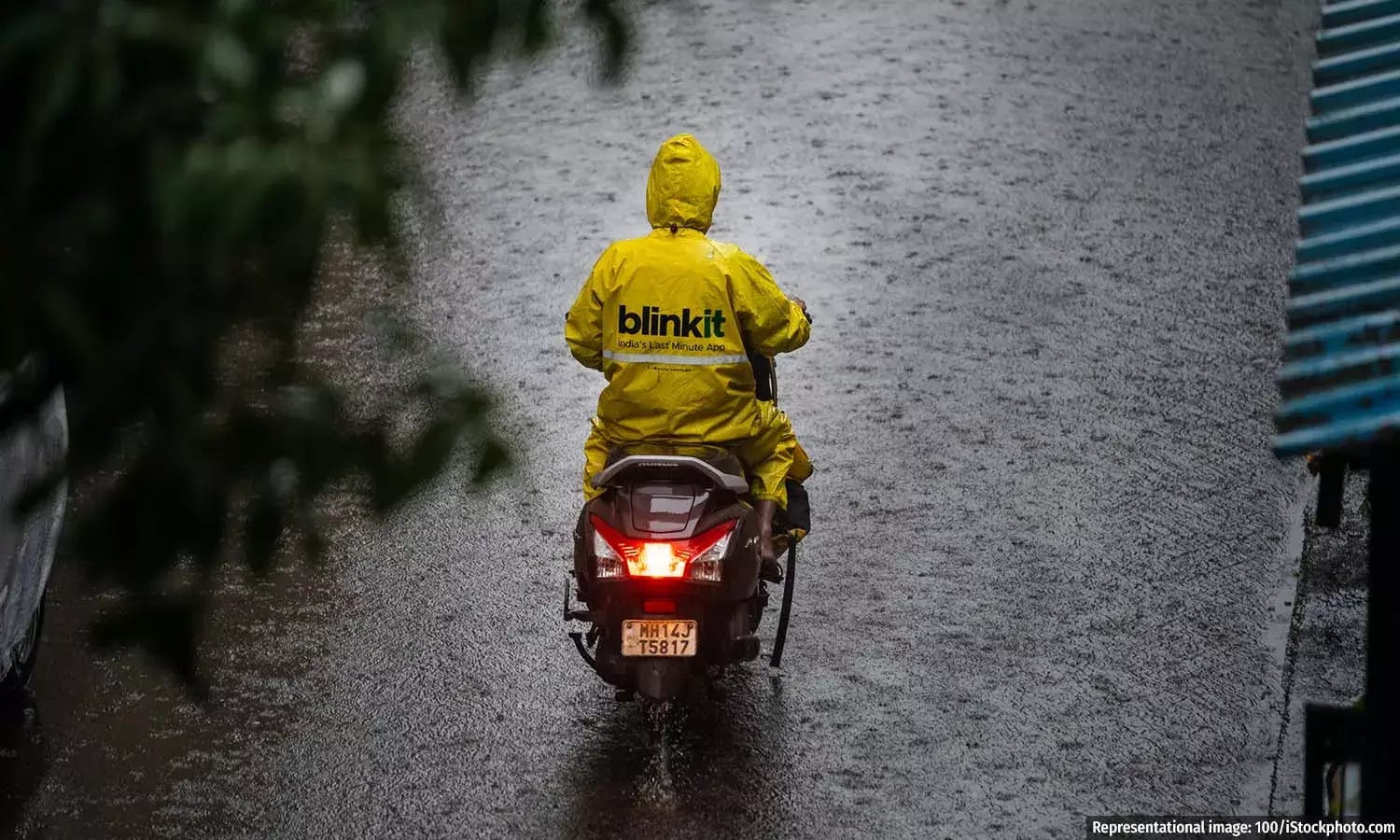
The new labour codes for the first time in India recognised gig and platform workers as a separate category. Yet, they keep them out of the purview of the Code on Occupational Safety, Health and Working Conditions, putting them at risk of low productivity, earnings and health impacts due to climate events.
For instance, even during heatwaves, many gig workers cannot afford to skip work. Because they are not part of the OSH Code, “they are generally not covered by labour standards on working hours, rest breaks, overtime, or workplace welfare provisions,” Nitesh Kumar Das, organising secretary of the Gig Workers Association says.
Rohini Krishnamurthy writes in the fourth part in the series.
Workplaces The Law Cannot See
On a blistering afternoon in June, when the temperature had crossed 40°C, 52-year-old Manju was at home in the dense Mewla Maharajpur locality in Faridabad. She wasn’t feeling too well, but set out to her employer’s house, 20 minutes away. A few minutes into the walk, she knew something was terribly wrong. “I began to feel overwhelming thirst, followed by a parched throat and nausea. I sat on the side of the road and managed to get drinking water from someone nearby,” she said. She still made it to work, worried about the loss of wages, and guilty about missing work.
Domestic and home-based workers work at homes, which are not recognised as workplaces. This makes it hard to implement India’s new labour codes, most of which are for establishments with 10 or more workers. Even provisions that are applicable to unorganised sector workers are difficult to implement and monitor as there is no setup for checks or tracking of domestic employers and contractors.
In the concluding part of our series, Rohini Krishnamurthy looks at how this makes these workers particularly vulnerable to the impacts of climate change, and on solutions that can help expand the social security net to protect domestic and home-based workers. Read here.
Recent stories:
The Climate Trouble On India’s Roads
Roads and bridges are designed considering weather and flood events, but the frequency of these extreme events is rising, experts say
In Goa, Real Estate Land Grab Threatens Protected Eco-Sensitive Slopes
Goa has a statewide regional plan demarcating slopes where development is prohibited. Introduced to reduce landslide risks, the protection is being systematically diluted
On Sunday Walks Along Ludhiana’s Buddha Darya, A Citizens’ Group Counts What Is Left To Fix
A citizens’ group helped cut effluent discharge points from 370 to 15. A policy change could remove this leverage elsewhere, experts say
Here’s wishing you a happy Diwali. We’ll be back next week with more stories.