


Dear Reader
As of Friday, with about two weeks left in the monsoon, India has a 13% rainfall deficit. East and northeast India received 25% less rainfall than the long-period average, while the southern peninsula saw 22% less.
About half of the country is under drought or drought-like conditions, according to researchers from the Weather and Climate Lab at the Indian Institute of Technology, Gandhinagar. Kharif sowing is down nearly 12% from this time last year, with rice seeing a 16% decline in sown area. The Food Corporation of India has adequate buffer stocks of rice and wheat.
But maize has a different trajectory. The area under maize has declined about 2% compared to last year, even as demand for it is rising due to its use in ethanol production. As a result, poultry farmers—who rely on stable maize prices and availability for bird feed—are seeing an increase in costs.
Poultry farmers from Maharashtra spoke to ISignal of their losses, especially when a weak monsoon might mean lower maize and soybean production this year, and said that unless maize cultivation increases, it should not be diverted for ethanol. Eggs are a cheap source of protein, important to improve the nutritional status of Indians.
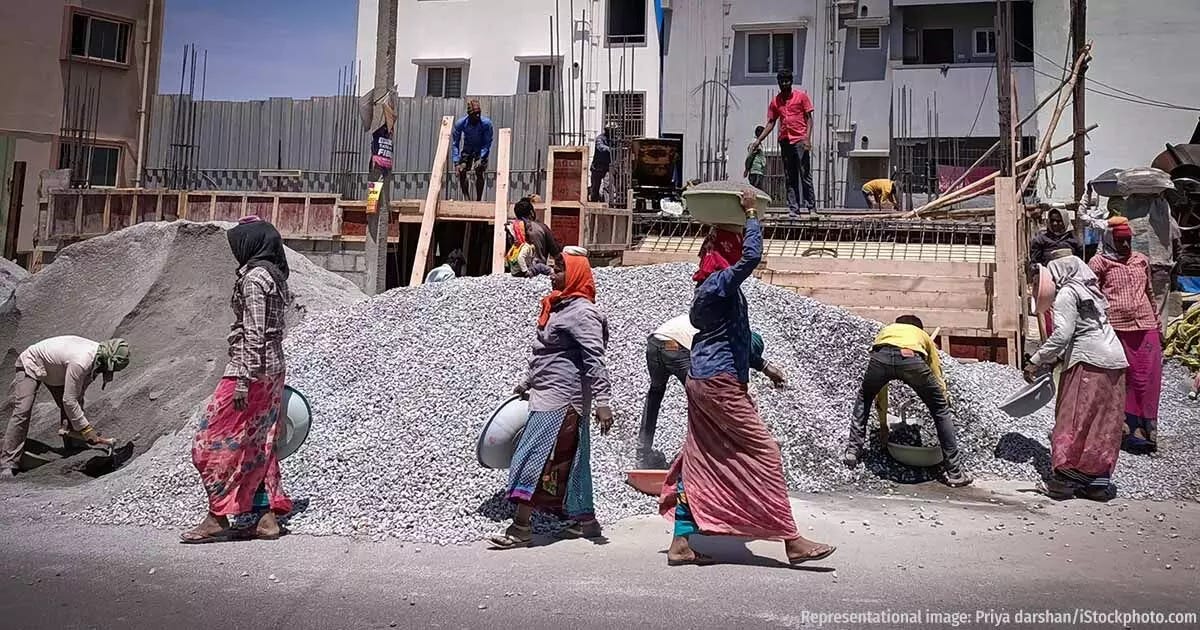
Elsewhere, India has about 70 million construction workers and 16.5 million street vendors. They are exposed to the elements, and cannot afford to miss work even during heatwaves and extreme rains or floods. Many of them fall through the protections of India’s new labour codes, we explain in the third of a five-part series.
The competing demands on maize
In 2025-26, India achieved record production of maize, at 55 million tonne, which is 11 million tonne higher than the previous year. Yet, India’s maize production finds itself under strain from the competing demands for human consumption, poultry and livestock feed, and the rising demand from the ethanol industry.
Sujit Patil, a poultry farmer from Sangli, used to buy maize for about Rs 12 per kg in 2019. Now in the off season, the price goes up to even Rs 32 per kg.
Earlier, “the cost to produce a single egg was Rs 2.50-2.60,” Patil said. “Now, it costs the farmer Rs 4-4.50. So the egg which you used to get in the market for Rs 5 now goes for Rs 8-10.”
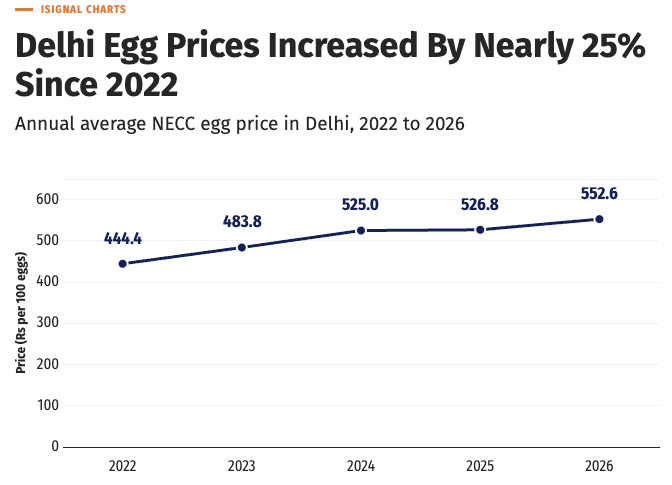
“Because maize got diverted for ethanol, its availability for poultry reduced and rate increased,” Anil Phadke, a poultry farmer from Nashik, said. If the vital feedstock becomes unavailable for poultry, Phadke estimates that the price of chicken will rise from Rs 200 per kg to Rs 400-500.
“Either maize production must be increased to meet the demands of both the poultry sector and ethanol or for now, you must stop supplying it for ethanol. Food should be a priority,” said Patil.
The contribution of maize towards ethanol blending increased from 0% in 2021-22 to around 37% in 2025-26. The E20 programme is targeted at reducing India’s import bill from fossil fuels such as petrol and diesel.
R. Ramakumar, a faculty member at the Tata Institute of Social Sciences, currently on sabbatical, said the increase in maize demand has reduced the area under other crops. “India has limited land. So where will maize grow? It has to substitute something else,” he said. “Incentives to convert from rice to maize are limited but incentives to convert from oilseeds or pulses to maize are much higher.”
But if the area under maize cultivation goes up at the expense of pulses and oilseeds and we have to import them, would that not cancel the E20 gains and therefore miss the point, asked Ramakumar.
Read Tanvi Deshpande’s report.
No protective cover
Baby, 50, is a construction worker who finds work with her husband. The couple work for 15 days a month, with her husband making Rs 500 a day and Baby earning Rs 400. Their total monthly income is Rs 13,500. “We work 8-9 hours a day. Our income is not enough to lead a decent life,” Baby says, adding that they do not get paid extra for overtime.
Women are typically engaged in low-skill work, assisting by moving bricks and other construction materials, preparing mixtures, collecting debris and throwing it away, and sweeping the construction site. They also earn less than their male counterparts.
Adding to the already existing vulnerability is extreme heat. Summers make life particularly challenging. “I manage to get some rest when the contractor is not present. If he finds us resting, he shouts at us,” Baby says. Workers have access to drinking water, although cool water is not available during summer.
Under India’s Code on Social Security, 2020, building and construction work does not include sites employing less than 10 workers in the preceding 12 months. It also excludes work related to residential purposes of an individual or group of individuals, where the total cost of such work does not exceed Rs 50 lakh. “If this narrow definition is applied, many workers could be excluded from social security,” estimates Subhash Bhatnagar, social worker at Nirmana, a nonprofit based in Delhi.
For street vendors sitting in the Karol Bagh market, finding shade is a problem. “I sometimes leave my products and take shade under a tree across the road,” 45-year-old Sunita (name changed) says. She earns Rs 300-600 a day in summers and in cooler months, Rs 1,000-1,500.
Meena Devi, on the other hand, comes only after 3 p.m. in the summer. “My income has dropped,” the 48-year-old says. Both vendors say they carry their own bottles as there is no drinking water supply in the market. Neither has heard about the PM SVANidhi scheme, launched by the government in 2020 to provide collateral-free loans to vendors.
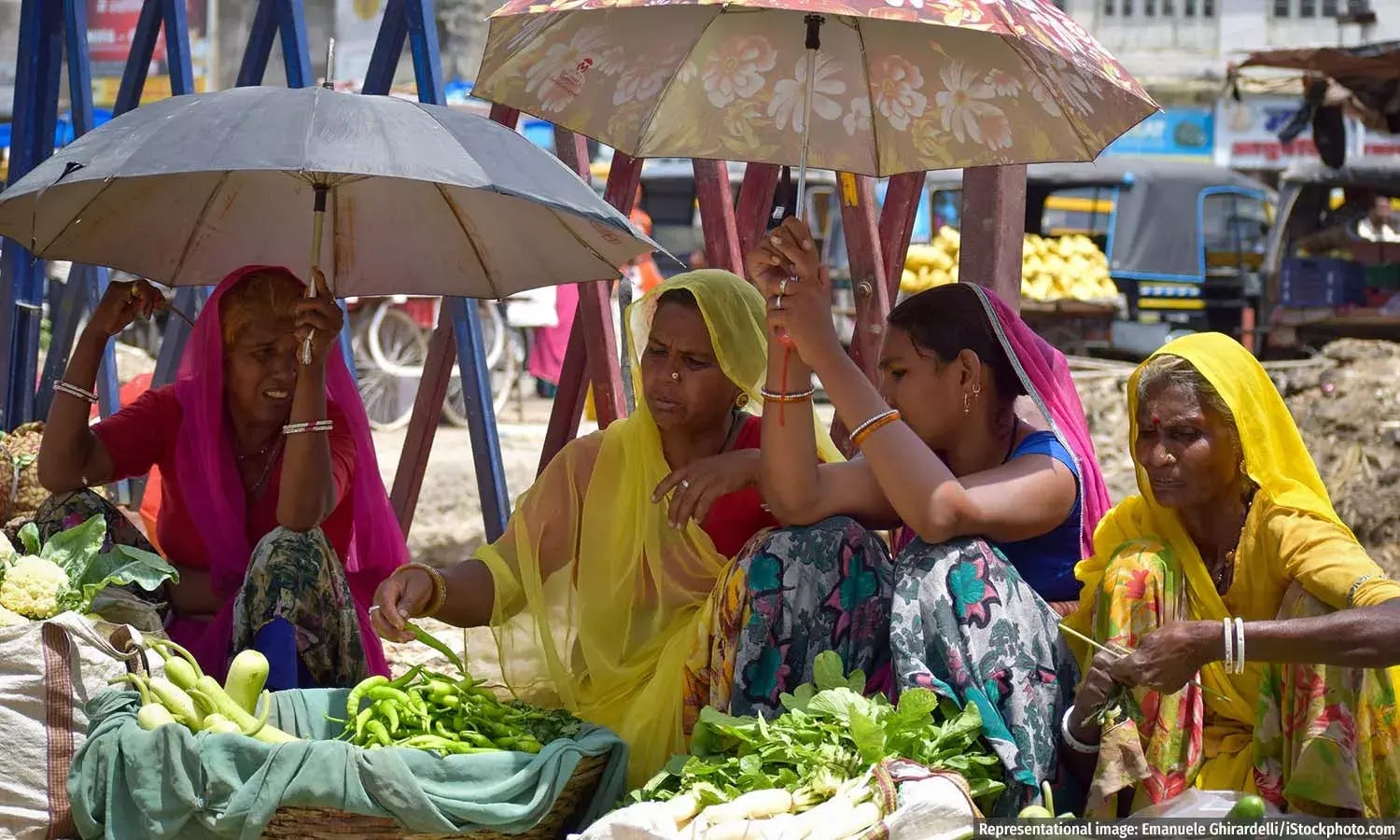
Kingshuk Sarkar, professor and chair for general management and public policy at Goa Institute of Management College, explains that street vendors are considered self-employed. “They might be running a business, but are not ‘entrepreneurs’. These vendors suffer when there is water-logging, intense heat, storm, cyclone. They lose their livelihood,” he says. “Yet, they do not get minimum wage. Their working conditions are not regulated. Instead, they often face eviction risk,” he adds.
“All informal workers are outside the OSH code,” explains Sarkar, referring to the Occupational Safety, Health and Working Conditions Code. The Codes also do not compensate informal workers exposed to extreme heat, unlike formal workers, as we explained in the second part of this series.
Have a good weekend!